COSMICS · INTRODUCTION
The Shape of a Doubt
We learned to measure a planet long before we learned how to live with what we could not predict.
EARTHVISION LAB · ~6 MIN READ
THE OLD QUESTION
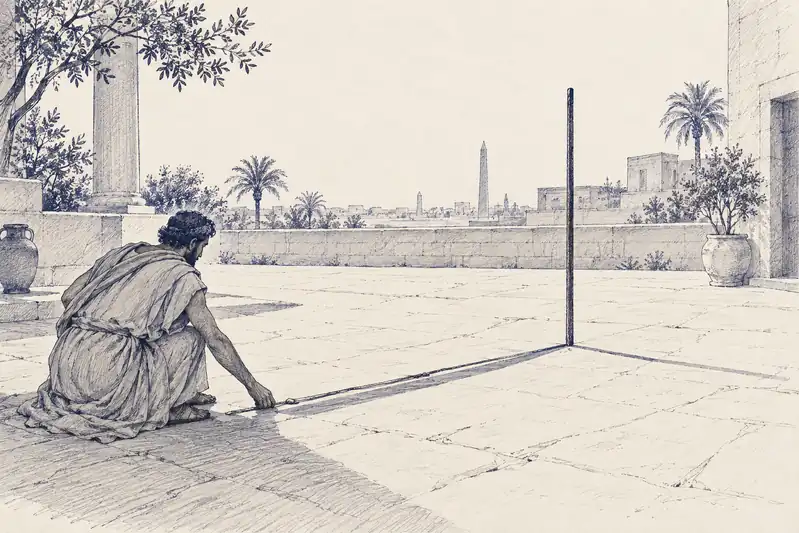
I keep coming back to Eratosthenes.
Around 240 BCE, he measured the circumference of Earth with two sticks, two shadows, and the distance between Alexandria and Syene. The answer was not perfect. It did not need to be. It was close enough to make the story uncomfortable: a person standing on the ground, with almost no machinery, understood something planetary.
Long before modern instruments, people built useful knowledge from repeated signals in the sky, water, seasons, animals, and land. The methods were local and uneven, and the explanations were not always right. But they raise a question that modern Earth science does not make disappear: what makes an observation become understanding?
MORE OBSERVATION
The planet became measurable
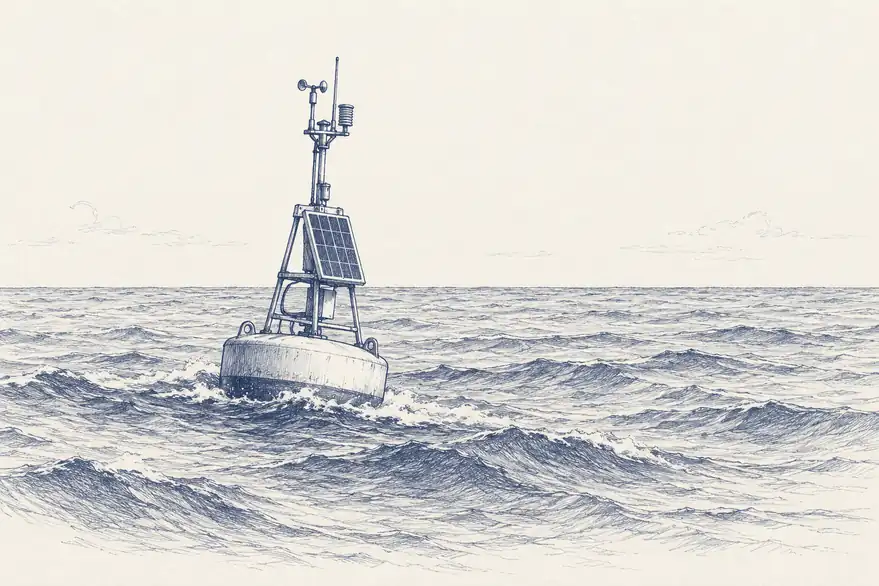
Today Earth is surrounded by instruments. Satellites, weather stations, buoys, aircraft, ships, phones, ecological sensors, and infrastructure systems continuously produce evidence that something happened somewhere. We can measure the planet at a scale no earlier civilization could have imagined.
That achievement is real. It is also where the harder question begins. A measurement can be precise without explaining a mechanism. A model can be accurate without being useful for the decision in front of someone. A warning can arrive and still fail if nobody knows what to do with it.
More observation gives us more chances to know. It does not guarantee that we know what the observations mean.
THE QUESTION FOR THIS BOOK
What would count as understanding?
I use the word understanding cautiously. It cannot mean perfect prediction, because Earth does not offer that kind of certainty. It has to mean something more practical: knowing enough about relationships, history, uncertainty, and possible futures that an observation can support a better decision without pretending to know more than it does.
The volumes that follow test that question across observation, planetary memory, prediction, machine intelligence, and the places Earth remains difficult to see. They are not variations of one answer. They are different places where the boundary between seeing and knowing becomes visible.
The planet is measurable. The question is what, if anything, that allows us to understand.