COSMICS · CHAPTER 5.8
The Planet Started Choosing What to Observe
A sensing system becomes different when it can decide what evidence it needs next.
EARTHVISION LAB · ~15 MIN READ
CLOSING THE LOOP
Most Earth-observation systems have historically followed a schedule: pass over a place, collect what was planned, send it down, process it, decide whether anything interesting happened, then request another observation later. The planet is permitted to change while the paperwork catches up.
That workflow is perfectly adequate for slow phenomena. It is awkward for a wildfire, volcanic plume, flash flood, transient methane release or rapidly evolving storm. The useful observation may exist for minutes or hours, while a conventional tasking loop can take longer than the event.
A closed-loop observing system changes the order. It observes, interprets enough of the observation to decide whether it matters, then changes what it collects next. The model is no longer only downstream of the sensor. It has become part of the sensor's control policy.
AUTONOMOUS SCIENCECRAFT EXPERIMENT
The idea flew before modern deep learning existed
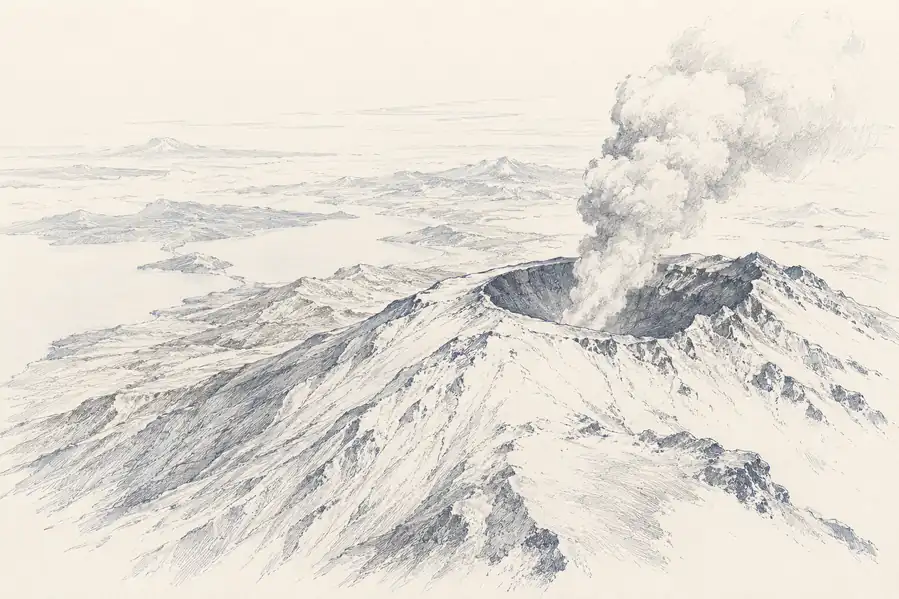
NASA's Autonomous Sciencecraft Experiment began operating on the Earth Observing-1 spacecraft in 2003. Its software combined onboard science-event detection, planning and execution so the spacecraft could identify phenomena such as volcanic activity, flooding and changes in ice, then adjust what it observed or prioritized for downlink.
The architecture matters more than the age of the classifier. Detection was connected to planning. A science result could alter the spacecraft's next action without waiting for a complete ground loop. That is the structural move modern autonomous observation systems are still pursuing with better models and much more capable onboard compute.
The experiment also established a useful distinction. Onboard analysis does not need to solve the entire scientific problem. It only needs to make a decision that is valuable before contact with the ground: keep this image, discard that one, look again, change priority, or notify another part of the observing system.
This is why autonomy in orbit is not simply the same software moved upward. Latency changes the value of inference. A modest classifier that can act within seconds may be more operationally useful than a better one whose answer arrives after the spacecraft has crossed the horizon.
NASA DYNAMIC TARGETING
In 2025, a satellite looked ahead and changed its own plan
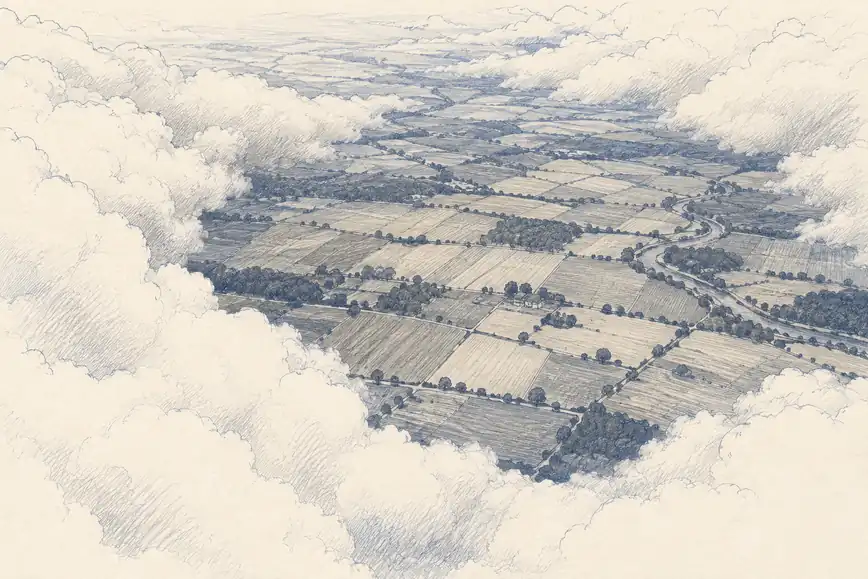
NASA JPL's Dynamic Targeting experiment demonstrated the modern version aboard the commercial CogniSAT-6 spacecraft in 2025. The spacecraft looked ahead along its future ground track, analysed imagery onboard for cloud, planned where a useful clear observation would be available, then repointed the instrument before reaching that location.
NASA reported that the full look-ahead, analysis, planning and retargeting process took less than 90 seconds with no human involvement. That timing is the point. A low-Earth-orbit spacecraft travels several kilometres every second. By the time an image reached a conventional ground workflow and a new command returned, the scene it should have observed could be hundreds or thousands of kilometres behind it.
Cloud avoidance is intentionally ordinary. Optical Earth-observation missions spend substantial capacity imaging scenes that turn out to be unusable because the surface is hidden. If a spacecraft can identify cloud before committing its main observation, it can spend limited storage, bandwidth and viewing opportunities elsewhere.
The same control loop can be aimed at less ordinary targets. NASA describes applications including storms, volcanic eruptions, fires and other short-lived phenomena. The system does not need to know the final scientific meaning of the event. It needs to recognize that this patch of Earth has become more valuable to observe than the patch that was on yesterday's schedule.
ONBOARD AI
More of the interpretation is moving beside the instrument
ESA's Φsat-2, launched on 16 August 2024, is a 6U CubeSat built around this idea. ESA describes six onboard AI applications for tasks including cloud detection, wildfire detection, vessel detection, street mapping and image compression. Its multispectral imager provides eight bands at roughly five-metre ground sampling over a field of view around 20 kilometres wide.
The spacecraft preprocesses imagery before running the applications, including radiometric correction, band alignment and geolocation. That mundane preparation is important. An onboard model is still a remote-sensing model. Moving inference closer to the camera does not make calibration, geometry or data quality optional.
In 2026, NASA and partners also demonstrated Prithvi, the geospatial foundation-model family discussed earlier in this volume, on two in-orbit computing platforms. A reusable pretrained representation can therefore sit close to the instrument rather than requiring every task to wait for raw data to reach a terrestrial data centre.
This creates a continuum of onboard intelligence. At one end is filtering: remove cloud or compress routine data. Next comes prioritization: downlink unusual scenes first. Beyond that is retasking: change what the spacecraft will observe. The hardware may be the same. The consequences of a model error are not.
THE CONTROL PROBLEM
An observing policy can create its own blind spots
Once a model controls observation, false negatives become more serious. A classifier that misses an event after it has been observed produces a bad label. A classifier that decides an event is uninteresting before the high-value image is collected can erase the evidence that would have shown the mistake.
This is a feedback problem. If the system preferentially observes things it already recognizes, future training data becomes richer in familiar events and poorer in unfamiliar ones. The observing policy can quietly shape the dataset used to improve the observing policy. A curious machine can become conservative without anyone explicitly programming caution.
A robust policy therefore needs exploration as well as exploitation. Some capacity should follow high-confidence events because they are valuable. Some should inspect uncertain or novel scenes because the model may be wrong. Active learning uses the same principle on labelled datasets: ask for the examples expected to reduce uncertainty most rather than labelling another easy example.
The larger architecture is cooperative. One spacecraft may detect an event while another instrument is better suited to characterize it. A thermal anomaly can trigger higher-resolution imaging. A radar observation can request an optical follow-up when cloud clears. The intelligence lies in allocating attention across a network, not in making every satellite individually clever.
That allocation depends on one faculty the previous chapters have mostly assumed rather than solved: the system has to know when the current evidence is weak. Otherwise autonomous observation is merely a faster way to act on confidence that may not deserve it. The next chapter is about giving doubt an operational form.
A sensor becomes part of an intelligent system when an observation can change what gets observed next.