COSMICS · CHAPTER 4.8
Machines Have Futures Too
Grids, aircraft, ships and supply chains forecast themselves while consuming forecasts of the planet around them.
EARTHVISION LAB · ~13 MIN READ
THE OTHER MODELS
Meteorology was not the only field learning to predict moving systems. Power engineers forecast demand and generation. Airlines forecast trajectories, fuel and arrival times. Shipping operators forecast routes and port calls. Supply-chain planners forecast inventory and delay. They developed separate vocabularies for a common problem: estimate state now, then propagate it forward under constraints.
The separation worked while infrastructure could treat weather as an external input. It works less well as electricity depends more on wind and solar, transport responds to extreme weather, and physical hazards propagate through tightly coupled networks.
ENERGY
The grid has to forecast both sides of the balance
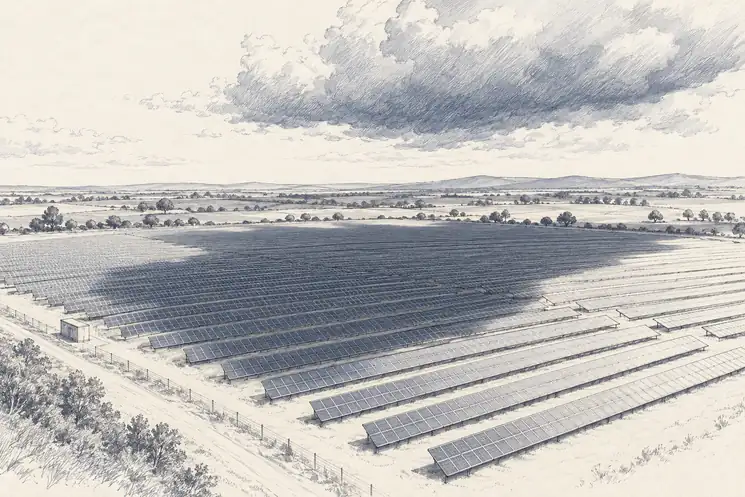
Electricity systems must keep generation and consumption balanced continuously. Operators therefore forecast demand from temperature, calendar effects and behaviour while also forecasting renewable supply from weather. Solar power depends strongly on irradiance and cloud. Wind turbines follow nonlinear power curves, with useful generation only inside a bounded range of wind speeds.
Forecast errors have operational cost. Underestimate demand or overestimate renewable output and reserves have to respond. Overestimate demand and additional generation may be scheduled unnecessarily. As variable renewables grow, weather prediction becomes part of routine grid control rather than an external planning service.
Compound conditions matter most. Heat can raise cooling demand while reducing the efficiency or capacity of some thermal and transmission assets. Drought can limit hydropower or cooling water. Low-wind periods can reduce renewable supply across large regions. The grid sees these as several variables. The atmosphere produced them together.
AVIATION AND SHIPPING
Routes are forecasts with steering attached
Air-traffic systems estimate future aircraft positions from flight plans, current surveillance data, aircraft performance and wind forecasts. A jet stream can change flight time and fuel burn enough to alter route planning before departure. The weather model is therefore embedded inside a trajectory model of a machine moving through it.
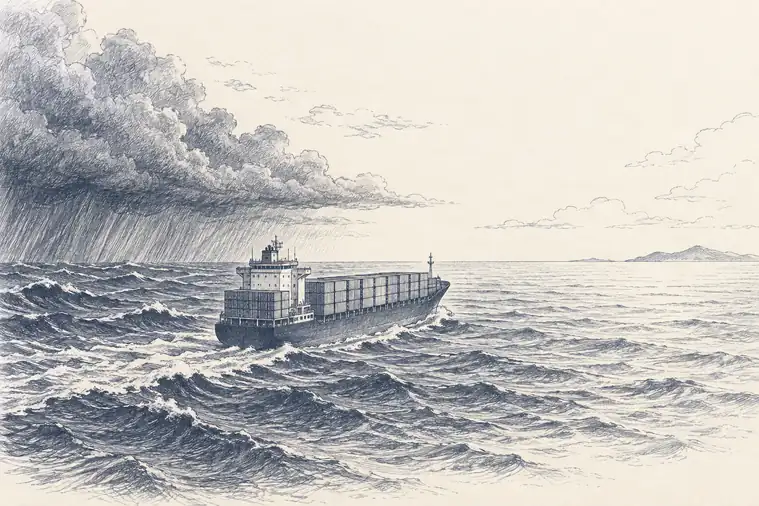
Maritime routing does something similar with wind, waves, currents, vessel performance, port conditions and schedules. The forecast is not only where the ship will be. It is which route should be chosen given several possible ocean and weather states.
Supply chains sit above both. A low river can restrict vessel drafts, a storm can close a port, a flood can remove a road, and a heatwave can reduce rail or power capacity. Physical forecasts become constraints in logistics models, often crossing organizational boundaries before anyone checks whether the uncertainty survived the trip.
WHY THIS BELONGS HERE
Forecasts become consequences at interfaces
Infrastructure is where planetary forecasts acquire operational consequences. A wind forecast changes reserve scheduling. A flood forecast changes a road network. A heat forecast changes expected demand. The physical model is upstream of another predictive system that has its own state, objective and tolerance for risk.
This is also where uncertainty is easily lost. A probability distribution can enter another system as a single expected value because that is what the interface accepts. The second model then produces a precise-looking output from an input that was never precise.
The next two chapters deal with that integration problem from opposite directions: first by reconstructing a consistent planetary state from incomplete observations, then by asking whether many models can be coupled without pretending they have become one model.