COSMICS · CHAPTER 6.7
The Machines Go Dark
Public tracking systems describe only the vessels, facilities and activities that remain visible to them.
EARTHVISION LAB · ~15 MIN READ
COOPERATIVE OBSERVATION
Not every Earth dataset comes from a sensor looking at an unwilling planet. Some of the most useful global datasets exist because the thing being tracked broadcasts its own position. Aircraft transmit identification and location. Ships transmit Automatic Identification System messages. Infrastructure operators report production. Governments publish registries. The observation works because the subject cooperates.
Cooperative systems are extraordinarily efficient. A ship can report its identity, position, speed and course more cheaply than a satellite can infer all of them from an image. The same principle underlies transponders, telemetry and many industrial monitoring networks. A participant explains itself instead of forcing an external observer to guess.
The weakness is equally obvious. A cooperative observation system measures participation as well as reality. A missing broadcast may mean deliberate disabling, poor reception, equipment failure, regulatory exemption or a vessel that never carried the system in the first place. The map of transmissions is not automatically the map of activity.
GLOBAL FISHING WATCH
Satellite imagery found the fishing that public tracking did not
A 2024 Nature study led by Global Fishing Watch combined satellite radar and optical imagery with vessel-position broadcasts and deep-learning models to map industrial activity at sea from 2017 to 2021. Instead of asking only where tracked vessels went, the researchers first detected vessels in imagery and then asked whether each detection could be matched to public tracking data.
The result was a much larger blind spot than the public map suggested. The study estimated that 72 to 76% of industrial fishing vessels detected in the mapped coastal waters were not publicly tracked. For non-fishing industrial vessels, the unmatched share was lower but still substantial, around 21 to 30%.
Not publicly tracked does not mean illegal. Some vessels are not required to broadcast publicly, some operate under different monitoring regimes, and some gaps are technical. Global Fishing Watch itself is careful about this distinction. The scientific result is about observability, not guilt.
The architecture is what matters here. One data source supplied identity-rich but incomplete tracks. Another supplied identity-poor but physically independent detections. Matching them exposed the missing population. A blind spot became measurable only because a second observing system did not depend on the first one's cooperation.
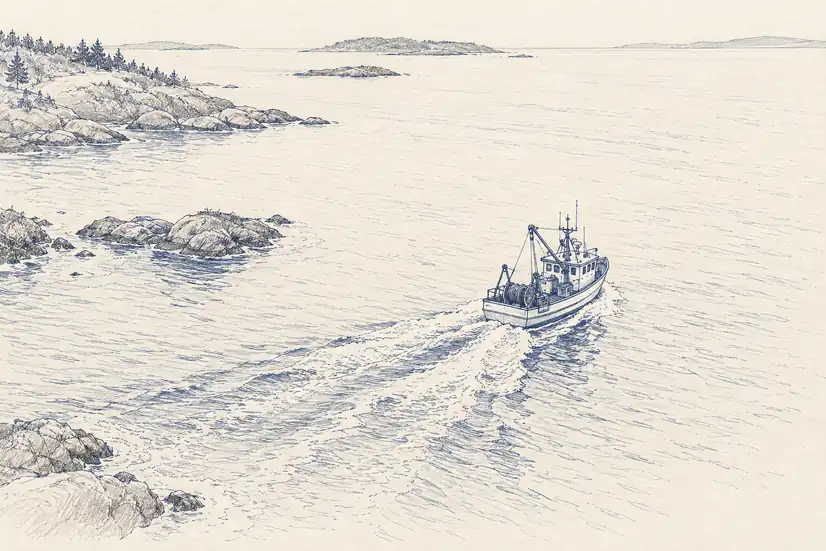
AIS GAPS
A gap in transmission is not automatically an act of concealment
AIS gaps are particularly easy to over-interpret. Satellite receivers do not collect every transmitted message. Coverage varies, terrestrial receivers require line of sight, dense vessel traffic can cause message collisions, and hardware can fail. A six-hour silence may be suspicious in one location and technically ordinary in another.
Global Fishing Watch therefore estimates how often messages should have been received before classifying a gap as suspected intentional disabling. Its current data caveats distinguish naive gaps from gaps that survive filters for reception conditions and other technical explanations. The absence of a message has to be modelled against the observation system that was supposed to receive it.
This is the same absence problem from the previous chapter with a human actor added. A missing signal can now be caused by the observer, the environment, the transmitter or a decision. The number of explanations increases exactly when enforcement would prefer one.
The useful response is not to trust AIS less. It is to understand what AIS is: a cooperative safety and tracking system, not an omniscient record of every hull on the ocean. Its blind spots are part of the product specification whether or not the interface displays them.
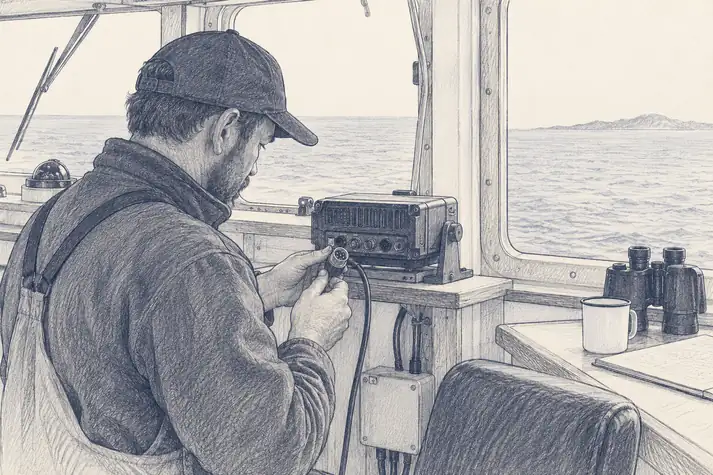
SPOOFING
Sometimes the data is present and the position is false
Going dark is only one failure mode. A transmitter can remain active while broadcasting an identity or position that does not correspond to the physical vessel. Global Fishing Watch has documented cases where AIS tracks placed ships in implausible locations and where radar imagery contradicted the broadcast position.
This is a harder observability problem because the database contains confident-looking data rather than a gap. A missing track invites caution. A false track can pass through downstream systems as though the vessel were observed. The strongest evidence again comes from disagreement between independent modalities: the radio message says a vessel should be here; the radar image says there is no vessel here.
Identity can be corrupted as well. Multiple vessels can broadcast the same Maritime Mobile Service Identity number, names can change, flags can change and registries can lag. The physical hull, the radio identity and the legal identity are related objects rather than one guaranteed record.
Planetary intelligence therefore has to represent contradiction, not merely missingness. A system that always resolves conflicting evidence into one clean track may produce a prettier map and a weaker account of reality.
THE GENERAL CASE
The world is easiest to observe when it agrees to be observed
Shipping makes the problem visible because a vessel is large enough to detect independently. Similar gaps appear in emissions inventories, groundwater pumping, land registries, industrial production and infrastructure telemetry. Administrative and self-reported datasets can be precise about what enters them and silent about what never does.
Independent physical observation can expose some of those gaps, but not all. A satellite may detect a large methane plume without knowing why the facility emitted it. Radar may find a vessel without knowing its identity. Night lights may reveal activity without explaining what activity occurred. Non-cooperative sensing recovers presence more easily than context.
The strongest architecture combines both. Cooperative data supplies identity and operational detail. Independent sensing tests whether the physical world agrees. Registries, telemetry and declarations remain valuable because they contain information a camera cannot infer. External observation remains valuable because it does not require every participant to report perfectly.
A system that knows only what the world reports is not observing the world. It is observing the reporting system.